Owen Park
The trip plan and the trip schedule are two related but different things that most travelers get wrong. The trip schedule is a list of dates and activities. The trip plan is the reasoning that the schedule was based on.
This article will continue the argument started in a previous post for dealing with trip planning in a far more efficient manner by dividing up the work into that which creates a viable Trip Plan and that which can then be turned into a reasonable Trip Schedule. As it turns out, making a plan for a potential trip does not take dramatically longer than creating a list of activities (Trip Plan < 500 words, Trip Schedule < 100). The real value here is that by adding this very modest amount of work to planning a potential trip one can create a trip that is significantly more able to withstand the inevitable random events that will occur once on the actual trip.
This is what a “schedule” for your trip might look like: Tuesday: Arrive to Lisbon, check into hotel. In the evening wander around Alfama. Wednesday: In the morning head to the Gulbenkian Museum. For lunch go to Estrela. In the afternoon Belem Tower. Thursday: Sintra. Friday: Morning in Bairro Alto for some shopping. Then in the afternoon go to the tile museum. For dinner go to the famous Cervejaria Ramiro. Saturday: Take the train to Porto and spend the evening wandering along the river. I purposefully made this schedule a little unrealistic in order to illustrate my point. Each of these disruptions to your schedule would require you to wake up early the next morning (you’re tired from the day before), in order to deal with all of the issues of improvising in order to continue your trip. Most people are not very good at dealing with these sorts of things when they are tired.
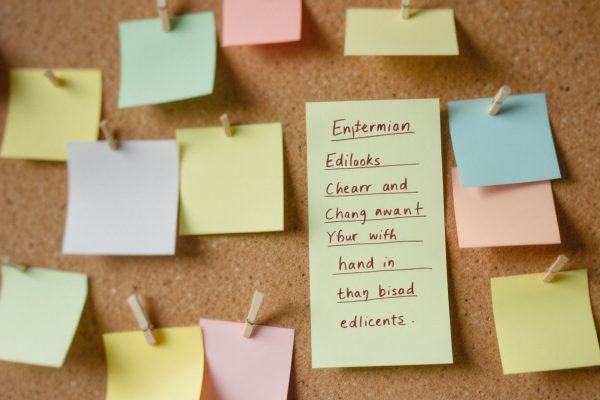
And this is the same trip outlined as a plan (I actually wrote this out before I made the schedule): Goals: see a few of the neighborhoods in Lisbon, see some of the significant art, eat some good food, get recharged for a really busy month at work. Must-do: Sintra, one major art museum (Gulbenkian or Tile Museum), live music one evening. Should-do: Belem Tower if it’s not too crowded, Bairro Alto one evening, Porto one full day. Could-do: Cascais day trip, Museum of Discoveries, go to a football match if there’s one. Sundays many of the museums are closed. Mondays are the worst days to go to Sintra. Don’t eat too big of a meal before a long walk. Backups: If Sintra is too crowded then go to Cascais instead. If Ramiro is booked then the seafood places in Cais do Sodre are just as good and a lot easier to get into.
The plan answers more questions than the schedule. It tells you what matters most, what is flexible, and what to do when the first choice is not available.
Now I plan my trips in a three-column format: (1) a brief description of my goals for the trip (2-3 sentences total); (2) a ranked list of activities I want to do (must-do’s, should-do’s, and could-do’s); and (3) a list of alternative activities that I would substitute for each must-do, should-do, and could-do in case something goes wrong with the first listed activity. Because this document only needs to be a few pages long (typically one page per trip) and because all of the items in each list were already decided in my planning process, it doesn’t take a lot of time to create the document, even though it provides a lot of value. It answers the key questions of the morning (what should I do today?), makes daily decisions easy, and helps to smooth out the impact of unexpected problems on the trip.
However, each morning of the trip you can decide about your daily program on the basis of your plan. It was rather rainy today. Although Sintra would have been the better choice for today due to the weather, your energy level is rather low, and after an extended period of time you don’t feel like going anywhere anymore. The Tile Museum in Poraca on the other hand is just a short walk from your hotel, and it is located inside a closed-off area, so it is dry and cool in there. It is on your should-do list, and since it is indoors, it is perfect for today.
Disruptions are not problems to be fixed when you have a plan. Cervejaria Ramiro is not taking reservations for Friday night. That’s a problem for people with a schedule, not a problem for someone with a plan. Their backup restaurant for Friday night is the seafood places in Cais do Sodre, which are every bit as good and easier to get into. This is not to say that the disruption did not require any time or energy to deal with. It did. But it was not a huge problem, unlike it would have been if I had just a schedule to go by. Over the course of a 2 week trip with 3 or 4 such predictable disruptions, the difference would be huge.
On the other hand, there are fixed events that should go on a calendar. Flights and other travel have fixed times. Some restaurants require a reservation months in advance. Some museums are only open on certain days. A short calendar (about a page long), that lists out the fixed events by date, is a very useful planning artifact that can be used alongside your plan. The fixed events are constraints that your plan can then sort around.
My plan for the two-week Portugal trip was set out in a Google Doc. The two-sentence summary of my goals for the trip was at the top, followed by four Must-do activities, then six Should-do activities, then five Could-do activities with backups for the top items. Following that I listed out 8 fixed-time, fixed-date events: flights, reservations, and the like. Below that, I wrote out a handful of practice notes regarding several of the transportation cards I got, several of the neighborhoods I stayed in, and the generally-bad weather that we encountered. Total wordcount was 1,800, total time to create it out was 90 minutes. The document as-is was the only document I brought with me for the trip, and I never once referred to it after the first day or so of the trip; as I said above, I used one of the backup plans for a single item (the last night of the trip), and otherwise the framework worked smoothly to deal with the inevitable trip-problems. Overall it was the smoothest trip I have ever taken, and I have no doubt that the structure of my plan was a huge factor in this. (Note that I did not say that everything went perfectly. Obviously there were problems along the way. But the framework absorbed them all with ease.)
How this article was put together. Reporting was reviewed against primary sources and traveler accounts where applicable. Practical advice reflects what works for travelers in the conditions we describe. If circumstances have changed since publication, please let us know.