Sofia Almeida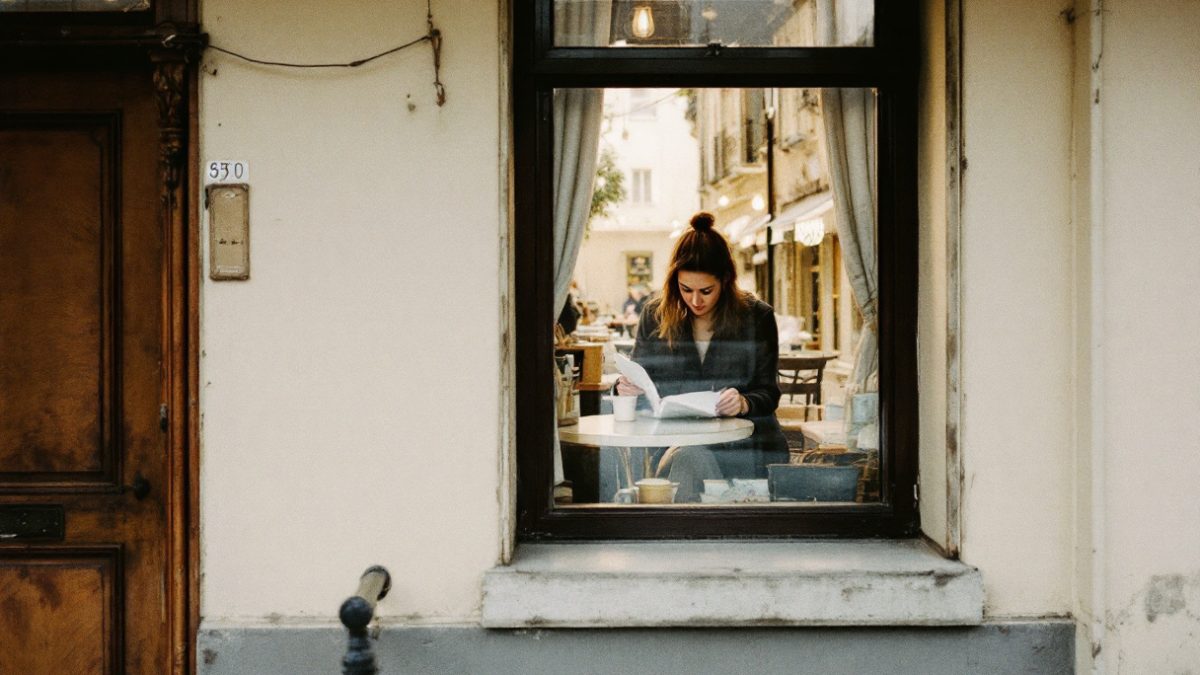
Many people travel solo and plan out each day of their trip to include museums, restaurants, hiking, a local neighborhood and maybe a show. But few people plan to visit a cafe. Often, a solo traveler will pop into a cafe for a coffee to take with them on their travels and then leave the cafe to continue on with their travels for the day. But a long cafe visit can be one of the best ways for a solo traveler to spend their time while traveling. It gets better with practice.
This piece outlines the small set of tactics I use for solo travel in cafes across the world. After over 500 solo cafe visits in more than 30 countries, I’ve come to realize that there’s a difference between treating a cafe as a way-point between other activities, and really getting to know a place and its people. It takes planning, but it’s really rewarding.
How to pick the cafe
Most guidebooks will recommend a number of cafes for tourists to go to. These cafes are usually full of other solo travelers doing exactly the same thing that you are, and are therefore pointless. Instead, look for cafes that are: within a 10 minute walk of where you are staying; in a neighborhood that is not the central area for tourists; have at least one window seat or outdoor table; are busy with regulars in the morning; serve food as well as coffee; have a slightly cluttered, but lived in feel to it.
Within a 10 minute walk of your accommodation in a non-central area of the tourist zone. 2. It has a window seat or outdoor table to watch the street from while you are there. Filled with regulars in the morning. I don’t want to go to an empty cafe – you generally find that they are empty for a reason. I want to go to a cafe that’s bustling with locals. Another vital criterion: they must serve food. I don’t want to go to a place where some thirty-second coffee-making trick is the main event. I want to sit in a place where some warm-hospitality-bearing human has invested in being there for the long haul. If they serve coffee too then even better. But their main offering is going to be some fare that has been lovingly baked and warmed in their kitchen. Over-designed cafes with industrial light bulbs and pretentious coffee cups are best avoided as they lack substance and real soul.
To find the right cafe I have found a method which works for me. On the first morning of my stay I walk three blocks in a seemingly random direction from my accommodation and sit in the first cafe that meets the criteria above. I then visit this place for the remainder of my stay, watching as the staff become familiar with my name and realizing that even the smallest of cafes can offer so much in terms of a sense of place and connection with locals and other travelers alike.
What to order
Most importantly: order the local default. This is the way to get the locals to take notice of you in most countries. In Italy, that will be an espresso (and probably more than one). In Vietnam, it will be the local style of coffee made with a phin. In Australia, it will be a flat white. In Portugal, it will be a galao. In Sweden, it will be a simple cup of coffee with a small cardamom bun on the side.
Additionally to your coffee order also order a piece of pastry or a small breakfast item, like eggs, pancakes, toast etc. This will give you a reason to stay longer at the cafe and make your visit to the cafe more meaningful, instead of just running in and out of it as if you are on an errand.
The tips have been generally excellent so far, but this is literally the cheapest tip I have picked up the whole time I have been traveling and it is in a hostel in Porto.
Note also how slow to eat you should be. Most places where coffee is served to take out have a fast-coffee culture but when you’re sitting down then eating slowly is perfectly acceptable.
Where to sit
Seat Selection. In most cafes, the way you sit tells other patrons and the staff a lot about how you intend to use the space. The three best seats in a cafe for a solo traveler, in order of preference, are:
2. A two-top by the window that looks out on the street. You can see the daily goings-on of the city. At a counter where you can sit and watch how the staff work. There is a lot to learn from observing the rhythm of receiving orders, pulling espressos, operating the cash register. And, yet, it is something you wouldn’t want to sit and observe in an unpleasant way. • Corner table. This is the best seat to observe how other people behave in a cafe. You will very quickly work out the social rules for entry and how people order. A corner table is a great base from which to sit and watch others around you.
But in the same way that you wouldn’t ask for the worst table in a restaurant, there are certain places in a cafe that you should avoid at all costs. The table in the middle of the room, the table directly under the speaker, the table by the bathroom door. All of these are places that the cafe puts customers that it doesn’t particularly need to look after. They’re the kind of people who sit in the corner and don’t bother to order anything for hours, or who come in and demand to know where the rest of the staff are. They’re the kind of people that you avoid in regular life, and it’s exactly the same in a cafe. Pick a better table.
What to do with your time
Don’t waste your time with a phone or a laptop in a cafe during solo travel. The idleness is where the true value of the cafe experience lies.
As with the previous point, books do well in cafes. Small, light, travel related – perhaps local published travel essays, poetry, biographies of local people, history books of places you have visited – then you can read them in cafes, and take them with you on the rest of your trip. A small notebook and pen: write down three things you have noticed in the cafe (such as the paper that the menus are printed on, the conversation at the table next to you, the smell of the coffee beans being ground). Just sitting. It’s the hardest and most under-rated thing to do in a café. Simply look at the street for ten minutes and observe what happens there.
The phone goes face down on the table. The laptop stays in the bag. You did not come to the cafe to do email.
The cumulative effect
The first day you sit in a café you may feel somewhat self-conscious. On the second day the staff recognize you. On the third day the barista at the counter nods as you enter the café. On the fourth day they even start making your usual without asking. By the fifth day you are a small fixture of the place and the café is a small fixture of your trip.
I take a small notebook with me. For the greater part this article was written in this place too.
I mentioned earlier that I keep a small notebook for things like this. Much of this piece came from it. Solo travelers often overlook the simple fact that the most memorable experiences come from returning again and again to the same place. It is the repetition that creates a relationship, and it is that relationship which ultimately leads to the memories that one returns home with.
The conversations that happen at cafes
Cafes are some of the few public spaces where strangers actually talk to each other in a city. The reading book can get comments from others, notebook writing can get people to ask you what you’re writing, and just ordering and picking up your coffee can get recommendations for other coffee shops in the city from the barista behind the counter.
Those so rarely last longer than a few minutes and remain real, even though most conversations in cafes are. What I learned about restaurants, the nicest places to go for a walk, about concerts, about alternative excursions, about friends I’ve met during my travels did.
The cafe as a structural element
Also I have come to notice that I use the morning cafe visit as a sort of anchor for my travels – if I am going to be in a place for more than 3 nights then I will visit the same cafe at roughly the same time each morning and order roughly the same thing. The rest of my travels can then oscillate wildly, but I will have a sense of ‘home’ in the cafe each morning. And it is pretty easy to establish solo travelers lack of rhythm in a cafe, while the cafe itself offers up a structure for free.
For solo travelers, finding a rhythm to your days can be difficult. But by returning to the same cafe, you can find a natural flow and have a unique experience while traveling.
Read more about how we verify travel information in our Fact-Checking Policy.