Sofia Almeida
Many solo travelers report that they don’t get to sleep as well as they would at home, and that the effects of poor sleep on solo long term travel are compounding. After all, we’re talking about a situation in which the effects of short-term sleep loss get to add up over the course of several nights in a row. I can report that after five nights of less than optimal sleep, I feel the effects acutely, and only return to full fitness after a couple of full nights sleep. This is the biggest hidden cost of solo long term travel. What strategies can help you get the best sleep possible on solo long term travel, when you’re sleeping in hostels, in hotel rooms, or in short-term rentals?
The compound cost of poor sleep
Poor sleep can cause greater problems than individual nights of lack of sleep. After 5 nights of less than 7 hours of sleep per night you can start to feel the effects of poor sleep, which will take 24 – 48 hours to return to normal. After 2 weeks of poor sleep, however, it’s not just your brain that starts to feel tired, your mood can also drop, your immune system will be weakened and you may find that you are more prone to minor illnesses. It’s a tell-tale sign that your body needs more sleep. Most guidebooks gloss over this problem but for serious travelers it’s a real problem.
Hostel dorm sleep strategies
However, getting to sleep in a dorm takes some serious creative planning. With the right eye mask, and good quality earplugs (I take Mack’s Silicone Earplugs or Loop), you will find that the noise and light will only effect you 80% of the time. In this type of situation I recommend sleeping in the top bunks in the dorms. This will mean less people walking past your bunk at night, and therefore less chances of something being left on the floor and causing you to wake up. On the other hand, there are usually bunks directly opposite the bathroom. This will cause you the most disruption every night. Unless the bathroom is completely out of the way (i.e. at the end of the room), then I would avoid sleeping in these bunks.
Hotel sleep strategies
When I’m staying in hotels the largest issue for quality of sleep is usually the air conditioning. I find the best way to combat these awful air con cycles that wake light sleepers is to download a white noise app or bring a small fan to place by your bed. To keep your room at the optimal temperature for sleep of 18 – 19° C (65 – 67°F) you will need to lower the thermostat, which is usually set much too high for ideal sleep by default. I also find that a rolled up towel put in the door light gap does wonders to stop light from the hallway entering your room and therefore also stopping you from getting a great night’s sleep.
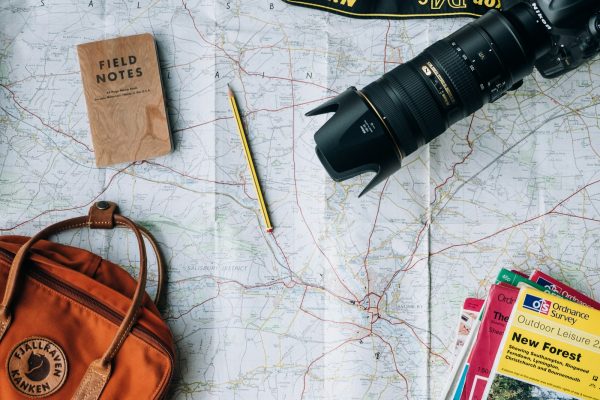
I keep a small notebook on travels. Often half the material for such an article as this comes from it.
Short-term rental sleep strategies
Airbnb’s are different in terms of sleep as they change greatly. Therefore before booking check the area for noise. A ground-floor apartment next to a busy road is far from ideal for sleep. Upon arrival at your rental always verify the bed before sleep as unfortunately some photo’s have been staged to portray a real bed and actually they are a futon/super single sofa bed. It is also very important to set up the bedroom as you would back home in terms of side of bed you sleep on and how you like your pillow’s arranged as slight consistency to your home is greatly appreciated for quality sleep.
Jet lag protocols that actually work
Although counterintuitive, Jet lag is something that can be fought. In traveling East (the hardest direction) exposure to morning light at your destination as well as avoiding evening light as much as possible is key. Some people also take Melatonin thirty minutes before bed for 3 to 5 days. When traveling West (the easier direction), you should expose yourself to evening light at your destination, avoid morning light, and stay up as late as possible the first night. I have found that one day per time zone is needed to adjust to a new time zone. This should be incorporated into the front of a long trip where large changes in time zones are necessary.
What I would tell a first-time solo traveler
Do bring less photos and more journal pages as there is more reward writing down your experience on a solo trip than collecting photos to put up on a webpage or to display back home when you return. Be under-ambitious for planning for your first solo trip. This could be a 14 day trip to 2 cities with 1 ‘buffer’ day per week – i.e. allow yourself some time to relax and get to grips with being solo before moving on. Also remember to spend more time in fewer locations as it’s only after you have settled into a particular location that you really start to get to know the place and people and have experiences that you can write home about in your journal and remember years later.
Closing perspective from years on the road
The advice contained in this article has been tried by many travelers on many trips. It represents general patterns that will work for most people in most cases. There will be particular circumstances on any trip that require variations on the general advice. These articles are meant to be a useful starting point for preparing to travel. They are not the last word. They are simply the result of the author’s long experience of traveling. He hopes that by reading widely, talking to other travelers and then putting the advice into practice, other travelers will learn from his mistakes and achieve their objectives more quickly. The practice of long-term travel is a skill that can be learned and the author hopes that this book will help readers to develop their own style of travel and to have the sorts of trips that they will remember for years to come.
Reviewed by Owen Park. Cross-checked against my own time on similar trips.
How this article was put together. Reporting was reviewed against primary sources and traveler accounts where applicable. Practical advice reflects what works for travelers in the conditions we describe. If circumstances have changed since publication, please let us know.