Sofia Almeida
Going on a long solo trip without a lot of structure can very easily become formless. Your days can start to blend together. Eventually, the trip can start to feel like a string of mostly insignificant events linked by your sleep. So, when you return home from a long solo trip, you’ll likely return tired, even if the trip consisted of lots of active events.
I’m reliant on the most simple habits, perhaps none more so than my morning routine. The biggest habit of all for a solo long term traveler is to have a structured morning. While that structure may change from day to day this set of 4 habits will remain the core of what I do each morning. Staying flexible and adapting to circumstances is key.
The four elements
The routine contains four main elements to help keep a straight head.
Ten to fifteen minutes of quiet, slow waking. No phone and no haste to get out of bed. Hot drink and short writing. A simple hot drink, usually a coffee or tea, made wherever I happen to be and then 10 minutes spent writing in a notebook with a few sentences about the previous day and then three or four sentences about what I hope to get from the current day. Body work: stretching, a short walk or some body-weight exercises. 20 minutes max. (Don’t need to be a ‘gym bunny’ and can do this in a small amount of space). I actually eat a real breakfast. This is in contrast to so many travelers that I see gobbling down breakfast materials while standing up at a counter.
All in all, my morning routine takes about 75-90 minutes. They can be done in a small apartment or hotel room, in a hostels’ shared lounge or while on a long bus ride through the country – basically anywhere.
Why it works
First, the routine is extremely portable. I can wake up in any apartment, hotel, hostel around the world and do my morning routine. The same routine. I can go to a cafe and write or do it in my hotel room. It doesn’t matter. The second reason is that the routine is extremely generous. It gives the body a lot of time to wake up slowly and to recover from travel in a really positive way. It’s really, really pleasant to wake up and have a hot drink and stretch and write three or four sentences about what happened the day before and then three or four sentences about what I hope to get done the next day.
This routine is also generous in the sense that it is slow and pleasant to do. All of the practices in this routine are intended to be calm and to give the body and mind the impression that it is being cared for at the start of the day. This is in direct contrast to waking up with a sense of urgency to start the day, deal with problems and make decisions. Such practices can generate a lot of stress and create a lot of pressure on the rest of the day. These practices give the body and mind time to slowly come back to full awareness after sleep.
The quiet waking
So often travelers reach immediately for their phone after waking. And in the minutes and seconds that follow, a surge of cortisol can hit the body as they pour over notifications, messages and news. This can build over days and turn what is meant to be a relaxing trip into a stressful one.
The fix to avoiding the phone-induced spike of cortisol in the mornings is to put the phone face-down or in another room until after breakfast. Give your body the time it needs to get going in the morning.
I book the second flight instead of the first. The first one gets booked way before I even get a chance to look at it.
I spend those minutes lying in bed to listen to the hotel surrounding, breathing slowly, stretching slowly. I might think about the day ahead but I’m not pressing to do anything with that thought. Mostly I’m just allowing myself to wake up slowly without reaching for my phone.
The hot drink and short writing
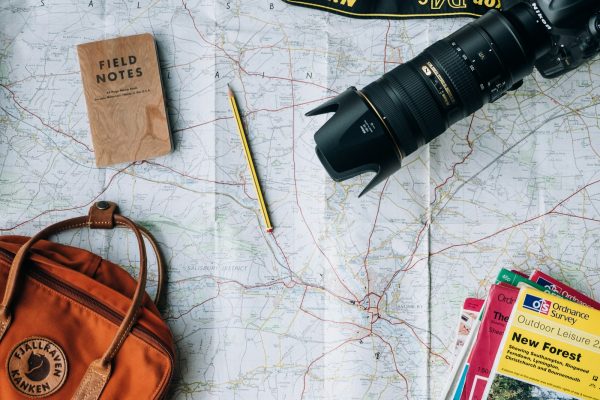
I write for 10 minutes in a very small notebook in bed, after making myself a hot drink in the room. I can write there far more easily than elsewhere in the hotel, and the notebook and the hot drink have become an essential start to my days, a ritual to prepare myself for the journey ahead.
This drink can be coffee, tea, or even a mate in Argentina where the tradition of this herbal tea is very strong. The most important thing is that it is easy to get it in the location you are in and that it becomes part of your daily ritual to signal the beginning of the day.
For my second activity, I combine a hot drink, made with whatever local ingredients are simplest to work with, with 10 minutes writing in a tiny notebook. I simply describe the previous day, and then outline a few goals for the new day – and that is it.
These have become the best artifacts of long-term travel that I have. They have given me great insight to the trips as a whole and allowed me to see patterns of days that have been most peaceful for me, days of anxiety, places where I am at my best and places where I struggle.
The light movement
For the past few years, I’ve taken twenty minutes of light physical activity every morning to manage the collective physical stress of long-term travel. Throughout the day, my body is usually sitting on a plane or standing between luggage racks in a crowded train wagon, walking unfamiliar streets in unfamiliar cities, and sleeping on often terrible beds. My body needs a daily dose of physical maintenance in order to function properly. As a general rule, I try to vary the physical activity I do in the morning to suit the spaces available to me.
My standard routine, modified for the space available:
Five minutes of stretches through the whole body focusing on the most problematic parts for a long term traveler: hips, shoulders and the lower back. Body weight squats and lunges for the legs. Five minutes of push-ups and plank variations. Slow Walking.
This is not a workout. It is maintenance. The point is consistency, not intensity. Twenty minutes daily across a year of travel produces a body that is more able than twenty minutes three times a week.
I tried to add more work outs to my daily routine, in the end it felt like I was doing more but in reality I was saving 40 minutes a day.
The real breakfast
The fourth component of morning routine is to sit down to eat breakfast. Don’t eat breakfast standing up or walking around. Don’t eat breakfast in front of a screen. Eat it while sitting down and paying attention to your food.
The food I am eating varies from country to country. Sometimes it’s a bunch of bread and cheese that I picked up from a local market, other times it’s been included in the price of my hostel, and still other times I’ve grabbed it from a small local cafe and am sitting at a window table eating it slowly.
If all you do is shovel in whatever you can as you are dashing to your next appointment, then there is little chance that you will feel full and nourished by your food. To be fed by the food you eat for breakfast, lunch and dinner, you need to sit down for 20 minutes of every day to very slowly and very mindfully eat your fare.
The downstream effects of this routine on the rest of the travel days!
The downstream effects, across many trips:
I start my day off more slowly, and take that slower pace with me into the afternoon. I have found that my decision making power has greatly increased. This is because I have given my brain enough time to wake up before making the first decision of the day. Additionally I am less tired in the afternoon. This is because my body hasn’t been running at high levels of cortisol for the majority of the morning. The evening transition is smoother. By 9 pm I am ready for the slower pace I have set up. Better sleep. Your body’s eaten at the right times and not skipped at inopportune hours.
The hard part
The hardest part of this routine to implement is the discipline involved in keeping up with it. In most cases it is tempting to ‘Skip it for today’ (especially when it’s a early departure to an airport for a flight or if you’ve had a particularly long or difficult day of activities etc). But in reality the routine is probably most needed on these kinds of days and so it is imperative to stick to it as much as possible. (That’s not to say it has to be the exact same routine on these days but a similar routine).
On travel days the routine will be more compressed and can take place on a flight for example in a gate area or on a bus trip in a station cafe.
The summary
There is no better structure for long-term solo travel than a consistent morning routine. In return for a 90 minute block of time each day you will have a more even keel, better decision making capabilities, and a sense of purpose to your travels.
Find your own combination of 4-5 activities that will become your own special routine. I have four activities in my routine, yours might only have three, or you might find you need five. It doesn’t matter. The consistency is the most important thing. After a week you will start to notice the difference it makes. After a year, you won’t be able to imagine traveling any other way.