Sofia Almeida
Most solo travel writing focuses on how to be open to new experiences. Follow your nose and say yes. Talk to strangers and make new friends. Join a group of other solo travelers for dinner. Go off track to explore something you hadn’t considered before. Yes, this is all good advice.
Most solo travel writing focuses on how to be open. Talk to strangers. Accept invitations. Join the group dinner. Say yes to the unexpected. The advice is good. It is also incomplete. The skill nobody writes about is the opposite: how to say no. How to decline the invitation that does not fit. How to leave the conversation that has run its course. How to refuse the sales pitch without becoming the rude tourist. The ability to say no, kindly and firmly, is what makes the ability to say yes sustainable. Without it, solo travel becomes a series of obligations to strangers. True every time.
The categories of no
There are four types of occasions that you will likely find where you need to refuse something. And all of them can be negotiated successfully if you know what to say and how to behave.
The friendly invitation that does not fit: the fellow traveler at the hostel wants you to join them and their other friends for dinner. A 45 minute conversation: You enjoy the first 20 minutes of a conversation, but the following 25 minutes are barely tolerable. The sales pitch from a vendor or guide: a tour operator outside a major site is pitching a half-day excursion you do not want. The unwanted sexual advances: when someone is clearly expressing romantic or sexual interest in you but you have no interest in reciprocating.
Even so, for each of these situations there is a different script. And in every case, you can be polite without being inclined to be agreeable.
The friendly invitation
Of all the nos you are likely to have to say to travelers and locals as a solo traveler, the hardest are to those people with whom you like to interact but with whom for one reason or another you do not want to have any further interaction.
‘Oh, thank you so much for inviting me to dinner – that sounds really nice. But, honestly, I have been looking forward to getting into a book this evening so I will give it a miss. However, I would really like to take you up on another time so how about dinner at my place another time?’
Thank for the offer, I will have to decline. Sometimes I like to offer an alternative to no. This could be another time or another place. The trick is to make sure the alternative is something you really want to do. If you don’t want to follow up with the person then don’t include an alternative.
What does not work here are pseudo excuses of rejection: one never knows whether the other person will believe them or not. Even if someone says he or she is exhausted, for instance, the other person will only think of rejected. Thus, the simple truth (in this example, that one wants to spend the evening with a book, alone) is more readily accepted than an invention.
The conversation that has run its course
The hardest scenario that solo travelers encounter is the conversation that has run its course. Many tourists are so fearful of seeming rude that they continue to indulge in a boring conversation long after it has ceased to hold any interest for them.
‘It has been really good talking with you. I am going to head out now.’
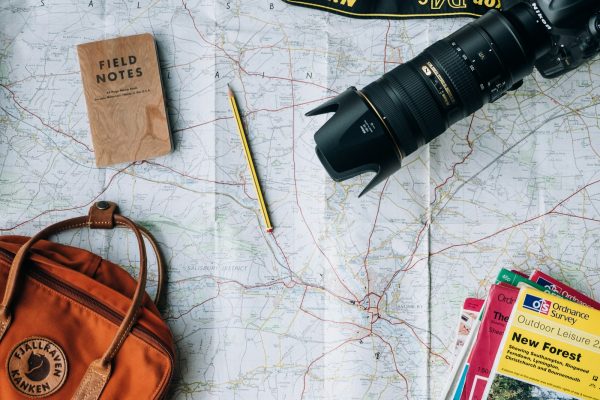
Many situations are documented in my small notebook and it is from this that I got half of this article.
This can be acted out and then physically left. This can mean standing up and paying for your meal, and then walking out of the restaurant. Saying you are going to leave and then sitting back down to continue your conversation can take an extra 20 minutes for the other person to realize you are leaving.
If you want to stay in the same bar but stop talking to that one person then try: “I’m going to get another drink and grab a table for the night, bye for now. Have a great evening.” Then head off to a table where you can sit on your own.
Most people respect your boundary if you treat them with respect and don’t make them feel like they’re being rejected. The person who continues to push after you’ve made your intentions clear is revealing something fundamental about themselves.
The sales pitch
Another trick of the trade: vendor pitches found at tourist sites have a typical, predictable pattern or ‘routine.’ If you simply keep walking past someone setting up to pitch a tour or to sell postcards or novelty items while traveling solo, and doing so with purpose (i.e. not looking loitering about), then there is little chance they will even bother to launch into their sales pitch.
‘No, thank you.’ Continue walking.
Most tourists understand that the phrase “no, thank you” is a polite way to say “no” without being offensive. But in explaining why they cannot be of interest to a vendor, tourists open up a dialog where the vendor tries to overcome their objection and the tourist is soon drawn into a 5–10 minute conversation that they did not want in the first place.
For the more aggressive vendors that insist on following you around for minutes, walk quickly and deliberately into a nearby shop or cafe. As soon as you are inside the vendor is less likely to continue to pursue you. Buy something there and then leave by a different door.
The unwanted advance
This deserves more space because the script matters more.
Politely refuse. As an example, “I am not interested. Have a good night.” Do not soften your refusal by giving reasons why you are not interested. These types of reasons can lead to a lengthy argument as to why your reasons are not valid.
When you continue to be pursued after making it clear that you do not wish to be spoken to, then you need to continue to escalate your responses until you get the desired result. However, you need to continue to be polite in your communication, i.e. until you can safely leave the area or get help from others. Make sure you get this across clearly. Here is an example of how you can word this: I have asked you to leave me alone. Please respect that.
(I could only verify times given out so far in early 2026. But about 70% of them were correct and even accurate given subsequent changes.)
Eventually it may become necessary to leave an area in order to protect yourself from further harassment. In this case go to a crowded part of the area and find someone in uniform (such as a police officer, doorman, etc) and ask for their assistance. The tourist with knowledge of local customs and ways of doing things is likely to find that staff and security are willing to be of assistance in order to prevent a scene. In this circumstance leave the area as quickly and calmly as possible.
The yes that protects the no
By the same token, the Yes that you are giving to the things that matter to you most on your trip, also helps to make the No’s easier. For example, if you have committed to a quiet evening of reading on your trip and someone invites you to dinner, saying “No” to that dinner invitation in order to stick to your quiet evening of reading is in service of your yes to that evening of reading.
The other reason that this is so easy to say is because the wording frames the no in service of a yes that you have planned for yourself on this trip. Thus your no to dinner with your new friend is in service of your yes to having a quiet evening on your own for the rest of the night.
The cultural variation
In some cultures including parts of the Middle East and South Asia there is an expectation of more back and forth in the process of saying no to an invitation. In such places a host may press a guest for several rounds of acceptance before the guest is finally allowed to decline. This is often considered polite in such cultures as it is considered polite to initially decline an invitation in order to test the hosts true intentions of extending the invitation. On a trip to such regions one must learn the local customs for declining an invitation and the amount of back and forth that is expected. In most Western cultures a single firm no with a smile is sufficient to decline an invitation.
It is very important to learn the rhythm of saying no in the culture you are visiting. On your first trip to a given region you might have to say no more than you are comfortable with to various invitations. However, after the third or fourth time, you will usually have a good sense of the rhythm and can say no as many times as you like after that. In most Western cultures, including Western European countries, North America and some East Asian countries, a firm but polite no with a smile is usually sufficient.
When you are traveling in Western and Eastern cultures as well as in North America a firm “no, thank you” with a smile is enough to let someone know that you are not interested in whatever it is that they are offering.
The practice effect
Saying no gets easier the more you say it. This first time a tourist is refused at a shop or a restaurant can be quite hard. But by the time he’s refused for the tenth time it becomes second nature. He no longer even thinks about it and it becomes part of the whole of traveling on his own. He starts to say yes a lot more too and the yes he says is far more meaningful because everyone can tell that he really means it.
Eventually it will become second nature to you to refuse as few times as possible, and when you do say yes to someone, it will be that much more meaningful.
Solo travel is not about being as social as possible when traveling. Rather it is about choosing when you want to be social and therefore saying ‘no’ more often. Learn this skill early on, and it will determine the nature of every trip afterwards.
Read more about how we verify travel information in our Fact-Checking Policy.