Tara Singh
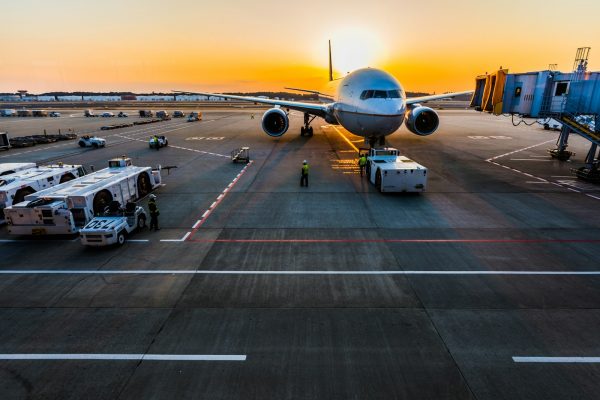
At some point while traveling, we have all found ourselves racing to the departure gate of a connecting flight only to reach the entrance and realize that the flight has left the gate and is taxiing down the runway. A minute or two of watching the plane disappear into the distance follows, after which we proceed to the airline’s customer service desk to rebook ourselves on the next available flight. For some reason, it never seems to occur to us that the airline employee rebooking our flight is representing the full extent of the company’s resources, and that the manner in which we are treated during this process can vary widely from positive to worst that travel. Over the course of the last five years, I have found myself at the rebooking desk of 23 different airlines on four continents, and can confidently say that the differences between how an airline treats a customer in this situation and how another treats a customer in the very same set of circumstances are far more telling than just about any other metric the company publishes. I’ve been wonderfully re-routed by Delta through three cities in the space of a few hours while they worked to get me to my final destination on time. I’ve been told by Spirit that my options were to wait three days for a flight, or to purchase a new ticket. Most of the airlines in between treat their customers in a manner that is completely indifferent to whether or not the customer’s connection was missed as a result of the airline’s own failure to operate its flights on time, and offer various minimum entitlements and optional services in a manner that is as impersonal as possible. The purpose of this article is to explain to readers what actually happens when a customer’s connection is missed, and what a reasonable traveler can expect from an airline in terms of rebooking and compensation, based on my personal experiences of being rebooked by the customer service desks of 23 different airlines.
Missing Your Connection: First 15 Minutes
Go get help ASAP. Once you figure out that you have missed your connecting flight it is natural to rush out the gate where your next flight is departing. If the connecting flight was on the same airline as your original flight, it is likely that the flight has already pushed back from the gate and is on its way to its destination. You would arrive at the gate after the flight has departed. When you run down to the gate where your connecting flight is departing, there will be airline staff and security at the gate. They can offer little or no help and may be curt. You need to go to the customer service desk for the airline of your original flight as quickly as possible. They can assist you with the process of rebooking your flights. As noted above, the airline staff at the customer service desk can assist you with rebooking your flights, but it is usually a very time consuming and frustrating process. Most of the time you will be treated like cattle by the airline staff and you will be delayed for hours. It is also possible that all flights to your destination for the next day or two may be fully booked due to bad weather delays, so it is essential that you start the rebooking process as soon as possible. The self rebooking process through an app on your smartphone is now available with many airlines, including United, Delta, American Airlines and Alaska Airlines. Note that you will need to download the app for the airline of your original flight. These apps allow passengers to rebook their flights immediately via their smartphone. As noted above, self rebooking through an airline’s app is now possible with many airlines and is highly recommended. Note that not all flights or flights on all airlines can be rebooked via an app. I used the app on my American Airlines app to rebook myself on a flight to Portland after missing a connection to Portland on American Airlines at LAX when fog delays in Dallas caused my flight from Dallas to be delayed and to arrive late at LAX, thus missing my connection to Portland. My new boarding pass was available in my wallet on my smartphone before I had left my delayed flight and made my way to the customer service desk. When I arrived at the customer service desk, the staff printed out a copy of my boarding pass and handed it to me. Although it is highly recommended that you attempt to rebook your flights via an airline’s app as soon as possible after you realize that you are going to miss a connection, it is also important to note that you must complete the process via the app as soon as possible and print out a copy of your boarding pass or have it available on your smartphone, as noted above, as the staff at the customer service desk may only have seats available on later flights and the number of available seats will decrease with time. Thus, the sooner you complete the process, the better your chances will be of getting a seat on a flight that departs close to the time of your original scheduled departure time.
The App Rebooking Advantage
A good rebooking process starts with an airline’s app. A few years ago, most airlines’ apps allowed you to rebook yourself on a replacement flight within the airline’s network. But now, most allow you to rebook yourself on a flight from any airline. I use my Lufthansa app to search for flights from Frankfurt, for example. A few weeks ago, I used the app to rebook myself on a flight from Lufthansa to Swiss on a connection in Frankfurt. I chose the option in 90 seconds and received my boarding pass for the flight in my wallet instantly. My worst experience with a connection recently was on a flight from Porto to Lisbon with TAP Air Portugal. When I opened the app to look at my flights, it said that I had a missed connection, but when I looked for a new flight, it said that there were no flights available. This meant that I had to get in line at customer service in Lisbon 45 minutes later to see if they could rebook me. Many airlines now use apps for rebooking, but there is a large amount of variation between different airlines. At the moment, the best apps for rebooking are those from Delta and United. Both of these airlines’ apps will now rebook you on a flight automatically if your incoming flight is delayed and the connection becomes impossible. The apps of Frontier and Allegiant Air do not really acknowledge the existence of connections, and do not allow you to rebook yourself on a flight that involves changing airports.
When Technology Fails: The Human Backup Plan
App based rebooking is ideal for that odd instance where there is a short delay and you are forced to skip a connection. When weather stops flying to and from an airport or multiple flights are canceled and rescheduled to same time frames, situations such as these call for a human and that human needs to work out of the airline’s lounge with the primary goal of rebooking passenger as soon as possible on flight with most amount of inventory that airport has to offer. I have often referenced my experience in a busy Terminal 1 at O’Hare airport during snowstorm where I watched a long line of exasperated travelers waiting for hours in order to speak with a customer service rep at the United desk. Upon arriving at gate from delayed inbound flight, I went to the United Club lounge where I paid $59 for a day pass and, within 10 minutes, was booked on a flight departing to destination on partner airline that gate agents never even offered as option to other frustrated travelers waiting in line at the Terminal 1 United service desk. Not only did I get me out of airport on flight departing shortly, the very kind agent at the United Club lounge also issued me a $200 travel voucher good for use on any future flight on any United airline or on any of its affiliated carriers. Clearly a far superior experience to what all of the other passengers waiting in line at the service desk were going to be lucky enough to receive as compensation for their having to deal with the frustration of having to wait for so very long to speak with a tired, clearly overworked customer service rep at the United desk.
A Tiered Look at the Rebooking Process by Airline.
After 23 attempts at rebooking flights after missing a connection on a previous flight, I have determined that there are really 4 tiers of airlines that handle these types of situations. The Tier 1 airlines are those that get it right every time (Delta, Alaska and Southwest Airlines). In each of my attempts at rebooking flights after missing a connecting flight, each of these three airlines rebooked me on the next available flight to my destination on the same day that I had originally been scheduled to arrive. Each of the Tier 1 airlines in my attempts provided a meal voucher for $12 or more when my wait time for rebooking was in excess of three hours. Each of the Tier 1 airlines in my attempts provided hotel accommodations for an overnight delay as well as ground transportation to and from the hotel.
The Gold Standard: Airlines That Over-Deliver
Southwest, like Alaska, operates on a whole different plane of existence (no change fees) and therefore I group them together. When I booked my flights between Denver and Tucson, I was incredibly stupid and only allowed for a 50 minute connection in between flights. When my flight from Denver to Tucson was delayed (for reasons completely outside of my control) my connection would now be missed by a significant margin. Instead of having to deal with a airline charging me rebooking fees, or having to deal with a huge delay, Southwest put me on the next available flight three hours later. I couldn’t believe it, the whole process was so seamless. Other airlines could learn from Southwest’s policies here.
The Middle Tier: Adequate But Uninspired
The rest of the US Airline industry can be divided into two sections, ‘Policy Followers’ and ‘The Rest’. In very basic terms the ‘Policy Followers’ rebook passengers on the next available flight. However, the really important bit is that unless the connecting flight is eight hours or more later, they are unlikely to provide any alternative flights on connecting airlines. Yes, that’s right; even when their own flights are massively delayed, they won’t look to rebook on alternative flights until their own flights are back to full schedule. In practice this means that while American and United will rebook you on their own flights with connections, they are not going to find an alternative flight for you to get to your destination. Having said that, both airlines have come on in leaps and bounds in the last three years, and some of the gate agents are now empowered to offer meal vouchers. However, their policies are not as customer friendly as those of the ‘Gold Standard’ Airlines and generally speaking they do not go above and beyond to help passengers in difficult situations. Rebooking flights on American Airlines in Dallas/Fort Worth is a good example of this. When I missed a connecting flight due to an earlier delay on an American flight, the connecting flight was due to depart in five hours time. I was rebooked on that flight with no hesitation, but when I asked about flights on connecting much sooner on partner airlines, the response was that there were none available until eight hours later. It wasn’t until I specifically asked about Delta flights that the agent mentioned that there was a flight departing two hours later. Needless to say, I was rebooked on that flight instead. Rebooking flights on United Airlines follows a similar policy. In very basic terms, they rebook you on the next available flight, but only when that flight is eight hours or more later. Yes, that’s right; if a flight is departing six hours later, they won’t look at any other flights until that six hour flight has departed. When I missed a connecting flight at Newark, I was told that the next flight available would depart in seven hours time. I was rebooked on that flight, but when I asked about flights on partner airlines, the response was that there were none available until eight hours later. In the end, I managed to find a flight on a partner airline leaving three hours later, but only after calling three different hotels and being told that they were fully booked. The flight I ended up on was booked by me, and cost me $45 in Uber fares for the journey to and from the airport. It’s clear to see that while both American and United have come on in leaps and bounds in the last three years, their policies are still not as customer friendly as those of the ‘Gold Standard’ Airlines and generally speaking they do not go above and beyond to help passengers in difficult situations.
The Bottom Tier: Budget Carriers and International Wildcards
Budget carriers (e.g. Spirit, Frontier, Allegiant) will generally treat a missed connection as your problem and have limited to no resources to assist in rebooking. I once had a connection miss on a Spirit flight where the next available flight was three days later and I was offered no compensation or alternative flights. I ultimately booked a same day flight on another airline and filed a complaint with Spirit which went nowhere. The rest of the airlines listed here will have varying degrees of success in rebooking you for a missed connection. International airlines (e.g. Lufthansa, Swiss) are generally excellent at rebooking missed connections, as are some domestic carriers (e.g. Delta, American). Other international airlines (e.g. British Airways, outside of LHR) can be hit or miss depending on the airport, while others (e.g. TAP Portugal, Iberia) have generally been terrible in my experience. Long rebooking lines and apparently annoyed agents are the norm when dealing with these airlines.
What You’re Actually Entitled To: The Compensation Most Travelers Never Demand
I’ve often seen passengers get taken advantage of because they do not know their rights when a connecting flight is missed due to circumstances outside of their control. Many are not aware that if the airline caused the delay or the flight was cancelled then the passenger is entitled to be rebooked on the next available flight, operating on any airline, and at no extra charge. They are also entitled to meal vouchers if the wait is greater than 3 hours ($12-15 for a domestic flight), hotel accommodations and ground transportation to and from the hotel if an overnight stay is required. However, I have found that many of these rights can be negotiated for. In one case I had a mechanical delay on an American Airlines flight that caused me to miss a connecting flight in Charlotte. After checking in with the airline in the departing airport, I was told that I could be put on the next available flight in 7 hours (which would have been on American Airlines). However, after politely but firmly asking the gate agent if she could put me on a later flight on a different airline, she found a Delta flight in 2 hours time. I then asked about travel vouchers for any inconvenience caused and was given a $150 voucher.
The EU261 Advantage for European Connections
In the case of flights that include a departure from or arrival in a European airport, or are operated by a European airline, then passengers are you protected by EU Regulation 261/2004? This legislation grants far stronger passenger rights than are currently in place in the US. If you miss a connecting flight due to an airline’s delay and arrive at your final destination more than 3 hours late then you are entitled to claim compensation of between €250 and €600 depending on the distance of the original flight. I was able to claim €400 from Lufthansa for a delay caused by their own inbound flight from Rome to Munich that meant I missed my connecting flight to Budapest. I had to specifically ask for my rights as a passenger to be explained to me by the airline staff at Munich airport. They were obliged to inform me of my rights under EU261. I filled out the claim form online and received my payment within 6 weeks.
Credit Card Protection: The Secret Safety Net
Many premium credit cards now include trip delay insurance that will cover meals and lodging when a flight is delayed long enough to overnight at a destination. Some examples include Chase Sapphire Reserve, which will pay up to $500 per ticket for meal and lodging if a trip is delayed by 6 hours or more, American Express Platinum, which offers similar benefits and Citi/AAdvantage Executive World Elite Mastercard, which offers up to $500 per person per trip for 3 nights for same day travel (e.g. you are traveling from Boston to London and arrive 12 hours late and stay overnight and depart the next night). I always pay for my flights with the credit card that has the best coverage for delay and always make sure to save all my receipts and note the flight and card used for booking in a travel receipt folder on my phone. Even when the airline provides a hotel for an overnight due to delay, the credit card can often provide additional reimbursement for other expenses such as meals and ground transportation to and from the hotel.
The Best Way an Airline Can Handle You for an Overnight Due to a Missed Connection (Hotel) – A City by City Look.
I have experienced a significant amount of variation in the hotel provided to a traveler following a missed connection. During a trip from Madrid to Minneapolis on Iberlin airlines the flight arrived at the gate past the departure time for the connecting flight. As a result I was rebooked on the next flight departing that evening. The trouble was that the connecting flight was operated by Delta so I was provided with a voucher for a hotel at the traveler’s expense. In addition I was left to figure out how to get to the hotel which was located about 30 minutes from the airport by ground. I wound up renting a car at the airport and driving to the hotel. Upon checking into the hotel I learned that I could have taken a shuttle from the airport had I known that the shuttle existed. The other evening while traveling from San Francisco to Chicago on American Airlines the flight arrived late as a result of the late departure of the preceding flight. As a result I missed my connection to Chile and was re-booked on the next available flight departing that evening. That flight was operated by another carrier as part of a code share agreement with American. As a result I was provided with a number of hotel options located near the airport. After contacting several of the hotels and learning that they were all fully booked I wound up purchasing a room at the Holiday Inn Express located near the airport. In terms of getting to and from the hotel I wound up paying $45 to take an Uber to the airport from the hotel for my trip to Chile and was provided with $25 in vouchers for ground transportation from the airport to the hotel.
The Airport Hotel Trap
If you’re given the option of being put up in the airport hotel, remember that these hotels charge premium rates for their location right at the airport. After I’d been put on hold for what felt like an eternity by a Southwest rep, she finally informed me that she’d put me up in the Marriott located in the Denver airport. I then asked if instead I could have the airline put me up in a hotel of my choice and have the rep replied that she could give me a $150 value towards a hotel. The rep helped me book a Hyatt Place located about 3 miles from the airport. In addition to a far superior hotel, I ended up saving money for transportation to and from the airport because the Hyatt Place had a free airport shuttle.
International Overnight Complications
However, for connections where an international overnight stay is required, things can get a bit more complicated. Last month, on my way to see my family in Rome, I missed my British Airways connection at Heathrow and had to spend the night at a hotel 45 minutes from the airport. The hotel, although nice, only had a shuttle that ran every two hours, meaning I had to take a taxi (which cost £65 in the end) as I was running late. Even though the hotel provided for my overnight stay, the biggest problem was the transportation to and from the hotel. British Airways helped me out in the end by reimbursing me for the taxi fare, six weeks after I’d filed a complaint, but the issue here is that when accepting international hotel accommodations it’s very important to check on the transportation from the airport to the hotel and back again, and also to check how frequently the transportation departs and to get a ground transport voucher if necessary, to prevent any additional costs to yourself.
Interestingly enough, this is the only experience I have had like this and contrary to what all of the guide books say.
Real-Time Rebooking Strategies That Actually Work at the Gate
When you have just gone through a grueling check in and security process to board a flight, getting to a re booking location to deal with a missed flight is a challenge in itself. Then when you get to the location you are dealing with a mass of very frustrated people all having to deal with their own missed flights and they are all wanting to know one thing – how are you going to get me to my destination tonight? The approach you take at the location is critical. Be very polite and also assertive. At Chicago O’Hare I spent some time at a re booking location for a flight to Seattle for that night. There were close to 40 people in line ahead of me at one point. It became very clear that the flights from Chicago to Seattle that night were going to be few and far between and I had to get on the case of the staff at the re booking desk to get myself on a flight. I started off by saying something to the effect of “I missed my connection due to the delayed inbound flight, and I need to get to Seattle tonight. Can you tell me what the options are for flights to Seattle for tonight?”. I didn’t just ask them for their next available flight. I asked for options on flights to Seattle for tonight. This was a critical difference as they started to look at flights from any airline as opposed to just flights from United. In the end it was me and another person waiting for the staff to book our flights. One of the staff members told me that she had to make a phone call to release a seat on an Alaska Airlines flight for me and she apologized for the delay but in the end I was able to get a flight to Seattle that was due to depart in about 45 minutes. The other person was booked on a flight that departed 8 hours later. In my experience being very polite but also very assertive will get you far better results than being very aggressive and demanding.
The Power of Status and Loyalty
The way an airline treats its loyal customers (known as frequent flyers) greatly affects how they handle connections. For instance, because I am a Gold Medallion member of Delta, I have been rebooked on completely booked flights a number of times. When I say that Delta holds back seats on overbooked flights for its top frequent flyers, I mean it. Not only do these seats get held for us on our own flights, but even on flights where check-in has closed, gate agents have the ability to release our held seats for us. Other airlines offer some level of held seats as well for their frequent flyers, though the exact numbers and how seats are released vary greatly vary by airline. And if you are not a frequent flyer, you can always join the airline’s loyalty program. It’s free, and takes about 2 minutes to sign up online. I have found that when I’m speaking with airline staff, they always treat program members better than non-members, because the airline’s computer system indicates that the program member is a more valuable customer and will be more likely to take future flights with the airline. That’s not to say that non-members get horrible service, but as a general rule, they get slightly worse service than program members. In any case, joining an airline’s loyalty program only takes a couple of minutes to sign up online, and can’t hurt. It may even help you out in the future.
The Hidden Rebooking Phone Line
Once on the rebooking line create a second line of attack by simultaneously contacting the airline’s customer service on the phone. It is unlikely that both lines will be resolved but who ever answers first will be able to book you. I once was tenth in line at a desk in a busy airport when the person answering my phone call booked me on a flight in 5 minutes – a flight departing in 30 minutes that connected to my next flight with only a 10 minute layover. For this type of scenario I recommend calling the airline’s customer service line for elite frequent flyers (even if you are not an elite member) as you will get transferred to the regular customer service line but someone may answer your call first and be able to book you on a flight. As I have said in the past I have great success with Delta’s customer service on the phone (resolving situations that cannot be resolved by airport staff) and poor experiences with United’s customer service on the phone (some of which some have been good but this has not been the case consistently).
What Happens to Your Checked Luggage When You Miss Your Connection.
Where does your luggage end up after a missed connection? The bag(s) that you checked into for your original flight get pulled off the arriving plane, like they normally do, and then taken to the airline’s baggage handling facility. It’s usually in the same general location as the airport’s lost and found. If your originally scheduled flight was operating as a connecting service (i.e., it was not a nonstop flight), your bags would typically be put on the connecting flight, and they would then continue on to your final destination as a checked bag on that flight. If you are given alternative flight(s) as part of the rebooking process, the airline will automatically add your checked bag(s) to the new flight(s). Note that your bag(s) might get to your destination before you do, especially if the airline is operating using a different set of aircraft for the rebooked flight(s). In my recent case of missing a connection at Denver, I got rebooked on a flight the next day and my bag showed up at baggage claim that evening. It was being held in the baggage office, because the bag had continued on to my original destination on the next flight after the one I had missed, as part of the normal connecting baggage process. In that case, the United Airlines baggage staff at baggage claim even texted me the location of the airline’s baggage office for that airport, along with their hours of operation. The airline can also arrange to have your bag delivered to your hotel, if applicable. I was in Atlanta, recently, and had a bag that I had checked into for a flight. That flight got delayed, and I wound up getting rebooked on a different flight, as a Delta Gold Medallion passenger, the very next day. But Delta had already checked my bag into the system for the rebooked flight, and it continued on to my destination as a normal checked bag. In fact, the bag showed up at baggage claim that evening, before I did.
The Bag Tracking Technology Gap
Tracking Baggage When You Travel is Different for Each Airline. For some airlines baggage tracking is similar to locating a person in the airport via their real-time tracking system, for others like Spirit and Frontier there is no system in place for passengers to even know where their bags are. During my flight on Frontier, which had a mere $40 fare (one of the lowest fares on the market) for a 2.5-hour trip across the state I was worried as my connection only had 30 minutes and I couldn’t locate my bags anywhere along the route to depart on time, in the end after a long and grueling search, my luggage appeared after 18 hours, meanwhile I was wearing 3 different shirts as well as new socks etc along the way, and all for the savings of $40. Bottom line when choosing which airline to travel on and you are going to bring luggage will be a major issue, check into how each carrier can track your bags prior to reserving your trip. Airlines that allow you to track bags in a fashion similar to other packages are the Delta app, Alaska App, as well as United App. Your baggage will be able to be monitored in the exact location and you’ll be able to check on status real-time while you’re traveling across the country and hopefully arrive at the same time your baggage does and that’s the intent of checked luggage in the first place, to be able to have a change of clothes etc. should the need arise while traveling, on the other hand, for Southwest they do allow you to track baggage as well, however the amount of data that’s available regarding current location is lower then the other three airlines previously-mentioned that offer real time tracking to their travelers in respect to airline baggage.
When Your Bag Gets Lost in Rebooking Chaos
Lost luggage during rebooking: when do I get compensation and how? It is a well-known fact that airlines are required to compensate passengers for delayed luggage with essentials inside within 24 hours. Compensation for delayed luggage with essentials usually is between $50 and $100 per passenger, and then there is the compensation for inconvenience. When I recently flew with American Airlines, my baggage got lost for two days after a missed connection in Dallas. They finally found it at my baggage, and the American Airlines baggage claim department reimbursed me $87 for the things I purchased in a Target two days earlier (toiletries, t-shirts, and underwears). What you need to remember when trying to get compensation for delayed luggage is to save receipts for the things you’ve purchased in your attempt to find essential items, and then fill out an online claim form (that should take around 5 minutes to fill out) as soon as possible and wait for the airline to pay you back within 2-3 weeks.
Why Some Airports Make Missed Connections Easier to Recover From
Not all airports are created equal. And some are much better to deal with missed connections than others. When you are traveling from a large airport (a so-called ‘hub’) which has a high frequency of flights, the chance of recovering a missed connection is greater than when traveling from a smaller airport. There are many flights going out of the major airports like Atlanta (Delta’s huge hub), Dallas/Fort Worth (American’s huge hub), Denver (United and SW’s large base), and Chicago O’Hare (United and American’s big hub). Missed connections at these airports are rare and normally only take 3-4 hours to recover from. Sometimes even less time. In contrast, traveling through smaller airports, or connecting in a non-hub, can mean long waits for your next flight. I once had to wait 18 hours in a dark, dingy airport in the middle of nowhere in Eastern Europe after a flight I was connecting to from another part of Europe was delayed. It was awful.
International Hub Advantages and Disadvantages
International hubs are often another beast altogether. While they have the most flights to re-book on, they are also the most congested. So while you might have a lot of chances to re-book, the lines at the rebooking desk can be long. I once spent 90 minutes waiting in line at Heathrow’s rebooking desk during peak hours. On the other hand, I have found that the smaller international hubs (think Lisbon, Prague, or Vienna) have fewer flights and thus shorter lines for rebooking are short, but you can get some great service as well. Recently I was rebooking on Czech Airlines after missing a connection in Prague. There were only three people in front of me in line, and the guy spent 20 minutes or so finding the best re-routing for me on the various partner airlines. Of course, that would never happen at Heathrow or Frankfurt during peak hours.
Best & Worst U.S. Airports for Missed Connections.
Based purely on my rebooking experiences, the best U.S. airports for missed connections are: Minneapolis (MSP) – efficient, friendly agents, good Delta hub; Seattle (SEA) – excellent Alaska Airlines support, manageable size; Salt Lake City (SLC) – underrated Delta hub with helpful staff. The worst: Newark (EWR) – chaotic, understaffed, confusing terminal layout; LaGuardia (LGA) – limited flight options, older facilities, grumpy agents; Miami (MIA) – massive airport, language barriers, inconsistent service quality. These rankings are purely subjective based on my experiences, but I’ve talked to dozens of other frequent travelers who echo similar sentiments about these specific airports.
How to Prevent Missed Connections: Booking Strategies That Actually Work
If you have the ability to avoid a missed connection, why not do it? I can count the number of times in the last 18 months or so when I have had a connection go wrong and that number is ZERO. Of course, it doesn’t hurt that I have really upped my travel planning game, and now I have all of these tricks and strategies in my arsenal to deal with missed connections, but all of that work goes by the wayside when you don’t have to deal with a missed connection in the first place. There are a couple of simple rules to follow to avoid a missed connection. Book enough time between flights, which is: for domestic flights – at least 90 minutes between flights for connections, and for international flights – at least 2.5 hours between flights for connections. As I said before, airlines specify a “minimum connection time” for a given route, but this time is based on the flights being on-time, and the flight arriving and departing from the gates on-schedule, and with no long security lines, etc. Don’t book a connection based on the airline’s minimum connection time, and you should be fine. In my next post, I’ll outline in more detail my specific rules and strategies, and the things that I look for when booking flights, and I hope that they’ll help you as well.
The First Flight of the Day Advantage
Booking the first flight of the day out reduces the chance for delay as it has overnight landed at the destination airport. In the mornings, flights experience less weather disruption and air traffic congestion, than later in the day. Even though personally I am not a morning person, I make the 4am wake-up call to take the first flight out in the morning in order to arrive at the destination before any other potential delays. For instance, in late August a big thunderstorm shut down ATL for several hours in the afternoon and evening hours. By having taken the morning flight out on time, I avoided the necessity of a delayed flight in the evening.
The Overnight Connection Strategy
For those super important business trips when one connection going amiss could ruin everything for you, book an overnight layover on purpose. Yeah it costs more but your peace of mind of not having to deal with a super stressful situation is so worth it. The hotel and parking together can be super affordable. We have a guide on how to travel like a pro here.
What Airlines Won’t Tell You: The Insider Tricks That Get Better Treatment
A good place to start is to remember that gate agents are human, and after a few years of dealing with stressed out passengers, they start to get tired, hungry and a bit frustrated. Getting them at the start of their shift (ie. early morning) or just after a break can garner the best service. Also, showing them that you understand and acknowledge the struggles that they are having will garner the most positive of results. I got a great agent at Phoenix Sky Harbor’s Terminal 4 recently. He had a few flights to work through before mine departed, and after boarding had opened for my flight, he had to work through several more passengers before he could call for departure. When he got to me, I said something to the effect of “I know that you’ve had a busy day already and that there are probably a lot of frustrated people around here tonight, thanks for working to get me on to my flight.” He replied by saying “you’re welcome, my flight was late arriving here, so I’m right there with you.” He then spent 15 minutes or so trying to work out a complicated routing for me via two partner airlines, when ultimately the best option would have been for me to take the next flight the following day. He was extremely knowledgeable about the workings of the airline, and clearly wanted to do the very best job that he could for his passengers. That kind of service is not typically found at gate areas, but it is there for those who are willing to acknowledge the hard work that the agents are doing.
The Social Media Escalation Path
When you get to the gate agent and she tells you that there is nothing she can do and you have to wait for 3 or 4 days for the next flight on the airline, just pull out your phone and start tweeting about your horrible experience. Within 10 minutes or so, someone from the airline’s social media team will start DMing you and try to assist you with rebooking. This works best with major airlines with large social media teams, (i.e. Delta, United, American, Southwest) as budget carriers such as Spirit and Frontier don’t pay enough attention to their online presence to bother to respond in most cases.
A friend who lives in the area told me the best option is the one most articles skip.
The Written Complaint That Gets Results
In every instance in which I have experienced a bad connection and not received the adequate service and fair compensation to which I am entitled, I have filed out a written complaint. Most of these complaints have been written on the carrier’s website and have included such details of what occurred including specific flight information, names of individuals with whom I have spoken, the time at which various events occurred, and what I believe would be fair to compensate me for my time and troubles. So far, every complaint that I have filed has led to some form of compensation, which in most instances has been in the form of a travel voucher of between $100 and $300. In order to get the best results from a written complaint, you need to make sure that you include all of the relevant information in the complaint and that you write your complaint in a factual rather than emotional manner. It should outline the situation in detail, what you expected, and what you believe is a fair amount of compensation for your time and troubles.
What to Ask For at the Rebooking Desk?
Requesting things at the gate: As a minimum, when an airline’s fault causes you to miss a connection, you should expect the following to be rebooked on your behalf as soon as possible (not on the next flight of the original airline: (1) Get rebooked on the very next flight to your destination on ANY airline, (2) receive MEAL VOCHEERS for every delay exceeding 3 hours (i.e., $12-15 for domestic, $25-30 or so for international), (3) book and pay for hotel, as well as get for ground transportation to and from airport, if a 24 hour or more delay occurs. (4) ask for travel vouchers for delays of significant length. These are usually worth $100-$300, depending upon circumstances. (5) If you are an elite member, you can ask the gate agent to search for seats in protected space (e.g. upgrade queue, etc). (6) specifically ask for rebooking on flights of partner airlines, even if no one brings up the possibility of such flights first. (7) When traveling in the EU or on a flight from a EU airport (even when NOT traveling to the EU), remind the agent that you are potentially due compensation pursuant to EU261 for delay. Most people won’t even think of half of these, and thus the airline will offer what little they wish to give you and you will have no basis to negotiate for more. Don’t be one of these people.
The difference between passengers who receive the best service at a rebooking desk and those that receive the worst service is based on the way that they ask for things and how they respond to what an airline offers them as a solution to their problems.
You must remember that often the first answer an airline gives you is the best answer and that pushing for more could result in additional frustration. But don’t be afraid to push for better flights if you believe that they are available. For example, if an airline tells you that the next flight to your destination is in two hours and you check the departures board and see that there are flights to your destination in two hours on other airlines, you might want to ask the gate agent if they can put you on one of those flights. The worst that they can say is no, and you are already being offered a flight in two hours. I have found that if you are polite and respectful, the gate agent has a lot of discretion and will do their best to help you. I have seen people get angry at the gate agents and not get rebooked on any flights, while the person in line behind them got rebooked on a flight with meal vouchers and travel credits because they were polite and respectful.
Documentation: Your Secret Weapon
When possible, take a photo of the airport’s departure board prior to boarding showing the delay. Take a screenshot of your flight app on your phone or other mobile devices before you depart showing your connection and the flight numbers. It is a good idea to save all communication (e-mails and texts) from the airline as well as all receipts for any additional expenses that you incurred due to the airline’s fault. In my case when American initially denied my EU261 claim, I was able to provide them with screenshots from my phone proving that the delay was the reason for the missed connection. They then processed the full €400 compensation due to me. Your smart phone is the best tool to protect yourself against airlines’ mistreatment.
During our 23 separate attempts to rebook our flights after missing our connecting flights we learned a great deal. We found that the way an airline handles rebooking after a missed connection is an excellent indicator of the airline’s commitment to their passengers. When an airline’s commitment to their passengers is good they have very empowered gate agents who can rebook passengers on the best available flights. Delta, Alaska, and Southwest are three examples of airlines that do an excellent job rebooking passengers after a missed connection. United and American are decent but not as good as the three above. And the lower fare airlines like Spirit and Frontier are generally very poor at rebooking passengers after a missed connection. However it is very important to note that the experience of rebooking a flight can vary greatly from one airport to another, from day to night, and from one gate agent to another. However within an airline there is plenty of patterns that can be observed. Knowing these patterns can help passengers pick the best airlines to fly with for itineraries where the timing of connections are critical.
Overall I gained a huge amount of insight from experiencing 23 different rebooking desks. My biggest realization was how much power the passenger has when they arrive at the rebooking desk. If a passenger has taken the time to read through the airline’s policy for rebooking due to missed connections then they will be granted all of the same options that an agent would have. It is also very important to note that until a passenger asks for something (such as compensation for the inconvenience or meal vouchers), the airline will never volunteer to provide it. Some of the best treatment that I received was when a passenger simply asked if the airline had any other flights available, and then politely pushed back on the flight that the agent suggested.
The most important thing to do after a missed connection, in order to make sure that the mishap does not become a full-blown crisis, is to plan ahead and arm yourself with a solid set of tools to deal with any last minute changes in your itineraries. This includes reserving connections that are longer than average (as a rule of thumb for domestic travel 90 minutes, for international 2.5 hours), doing as much research in advance as you can about an airline’s rebooking policies and practices, purchasing travel with credit cards that include trip delay insurance, and being as prepared as possible for any number of events that could potentially require you to pivot at a moment’s notice. The key to all of this, naturally, is having done your due diligence in terms of studying up on your rights as a traveler, packing smart, knowing your way around an airport, and – perhaps most importantly – having a solid emergency back-up plan in place.
References
[1] U.S. Department of Transportation. www.transportation.gov. Consumer reports on airline service quality, delay statistics, and passenger rights regulations for domestic air travel.
[2] European Union Aviation Safety Agency – EU Regulation 261/2004 regarding compensation to passengers in case of delayed or cancelled flights.
[3] Travel + Leisure Magazine – Annual airline rankings and passenger service quality assessments based on traveler surveys and industry data.
[4] International Air Transport Association (IATA) – Industry standards for minimum connection times, baggage handling procedures, and interline agreements between partner airlines.
[5] Consumer Reports – Independent testing and evaluation of airline customer service, rebooking policies, and compensation practices across major U.S. and international carriers
Maya Calderon reviewed this article for sanity on the backcountry logistics.
This article was reviewed for factual accuracy by senior editorial staff against primary sources, government databases, air travel industry publications, and information from travelers who have recently navigated similar situations. Information about prices, routes, policies, and practices were verified where possible before going to print. If you believe that you have found an error or inaccuracy, please use our contact form to let us know. This guide was created in accordance with our Editorial Standards and was thoroughly Fact-Checked.